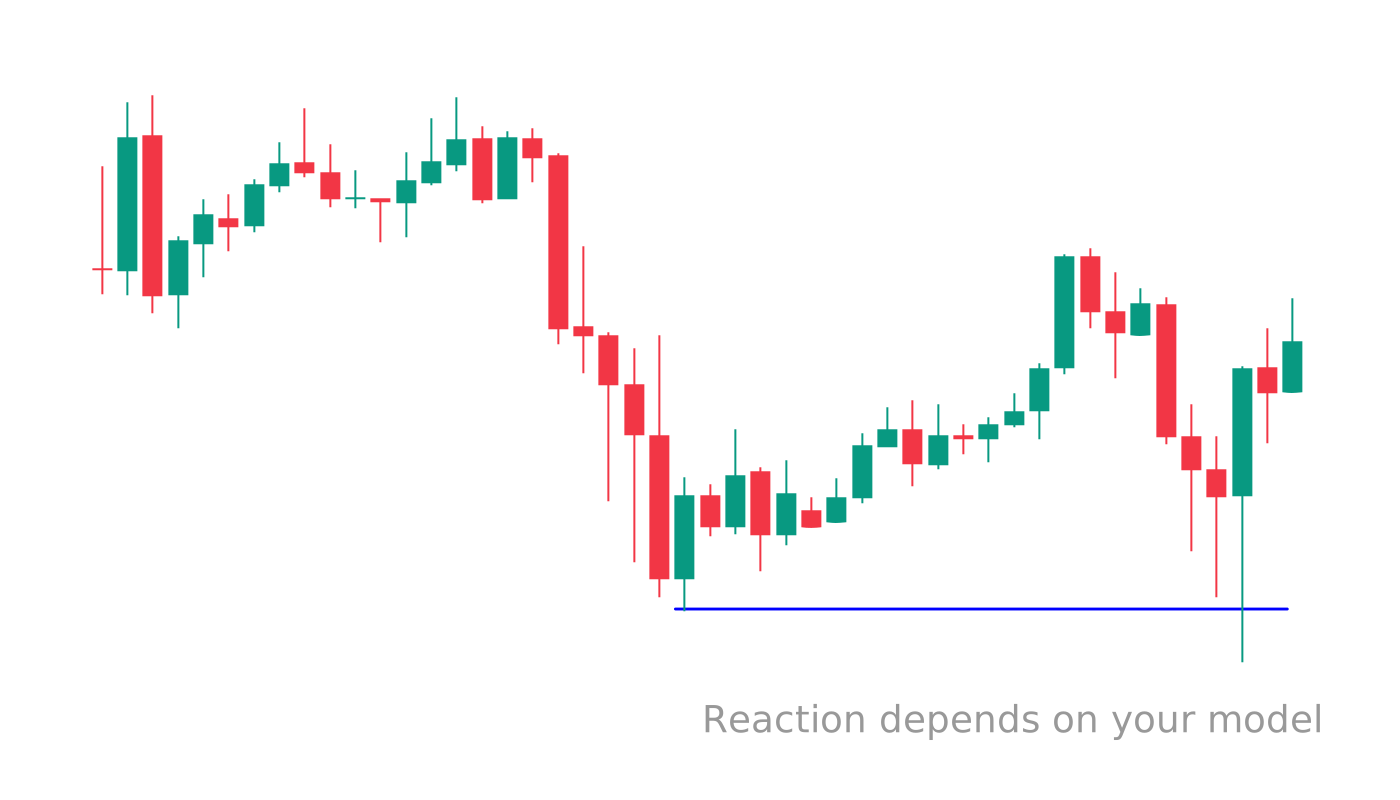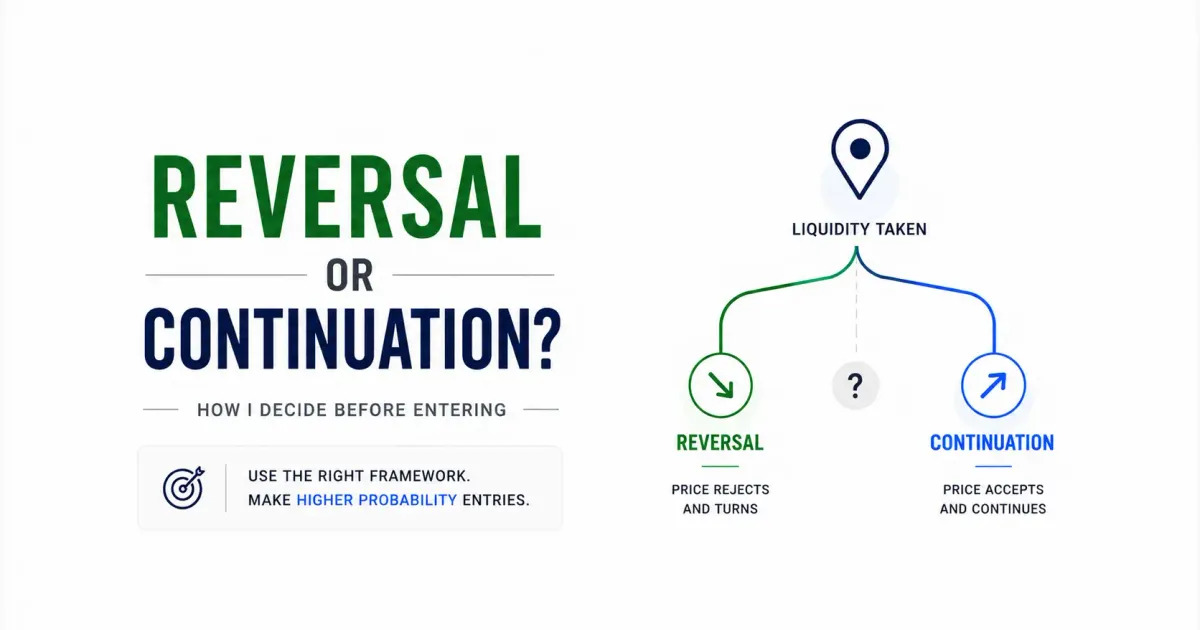
One of the biggest mistakes traders make after seeing liquidity get taken is assuming price has to reverse immediately. Sometimes it does. Sometimes it keeps pushing and traps everyone fading the move too early.
Here is the framework I personally use to decide whether price is more likely to reverse or continue after taking liquidity.
What Actually Happens at Liquidity
Liquidity getting taken by itself does not mean bullish or bearish.
Price moves into obvious highs and lows because that is where orders usually sit. What matters is how price behaves after liquidity gets taken.
Sometimes that move becomes the end of the trend.
Sometimes it is just a cleanup before continuation.
That is why I stopped entering immediately after seeing highs or lows get taken. Now I mostly wait for lower timeframe confirmation before committing to a trade.
Signs Price May Reverse After Taking Liquidity
1. Liquidity Gets Taken at an Important HTF Level
The location matters a lot.
If price is taking liquidity around:
- PDH / PDL
- weekly highs or lows
- session highs
- major swing points
the probability of reversal becomes much higher compared to random intraday highs and lows.
The bigger the liquidity pool, the more meaningful the reaction usually becomes.
2. Strong Displacement After Liquidity Is Taken
This is one of the biggest things I watch for.
After liquidity gets taken, I want to see price move away aggressively from the area. Strong displacement usually tells me the market actually reacted to the level instead of just ranging around it.
If price slowly chops around after taking liquidity, I become much more cautious about fading the move.
Strong reversals usually react quickly.
3. Lower Timeframe Structure Shift
This is where many traders enter too early.
Liquidity getting taken alone is not enough for me anymore.
I usually want to see:
- CHoCH
- iFVG
- BOS
- strong displacement (FVG)
- rejection from FVG
before looking for execution.
Most failed reversal trades happen because traders anticipate structure shift instead of waiting for it.
4. Clean FVG Retracement
After displacement, price often leaves behind an FVG.
That retracement usually gives a much cleaner entry compared to trying to catch the exact top or bottom immediately after liquidity gets taken.
Personally, most of my better entries come from:
- liquidity taken
- displacement
- FVG retracement
- rejection from FVG
instead of entering instantly after the sweep.
5. Session Timing Makes Sense
Session context matters more than most people think.
For example:
- London taking Asian highs and reversing
- NY taking London highs
- Gold reversing after Asian expansion
These setups usually behave much cleaner compared to random liquidity moves during slow market hours.
A good setup during active session tends to have much better follow through.
Example of a Reversal Setup
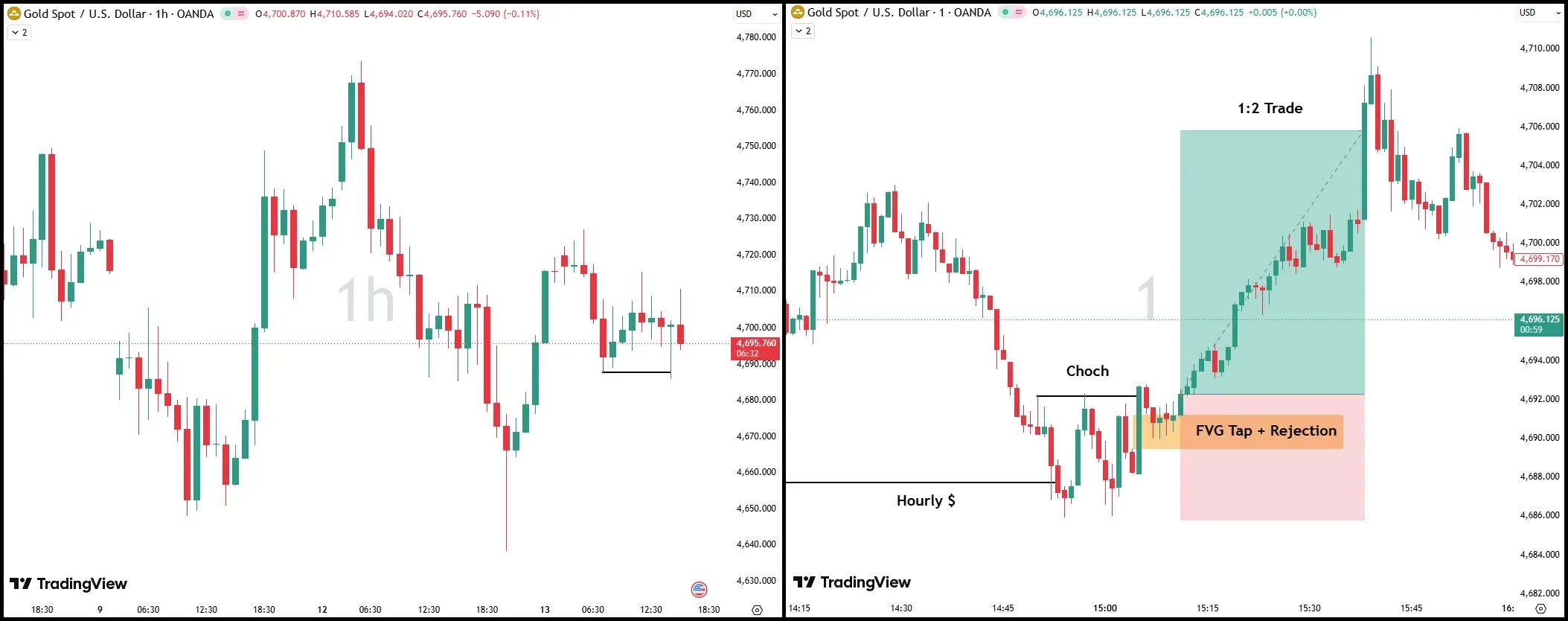
In this setup:
- liquidity was taken at a key HTF level
- displacement was aggressive
- lower timeframe structure shifted
- price retraced into FVG and rejected
That confirmed price was likely preparing for reversal instead of continuation.
Signs Price Is More Likely to Continue
Now the other side.
This is where many traders get trapped trying to fade every liquidity event.
1. HTF Trend Is Still Strong
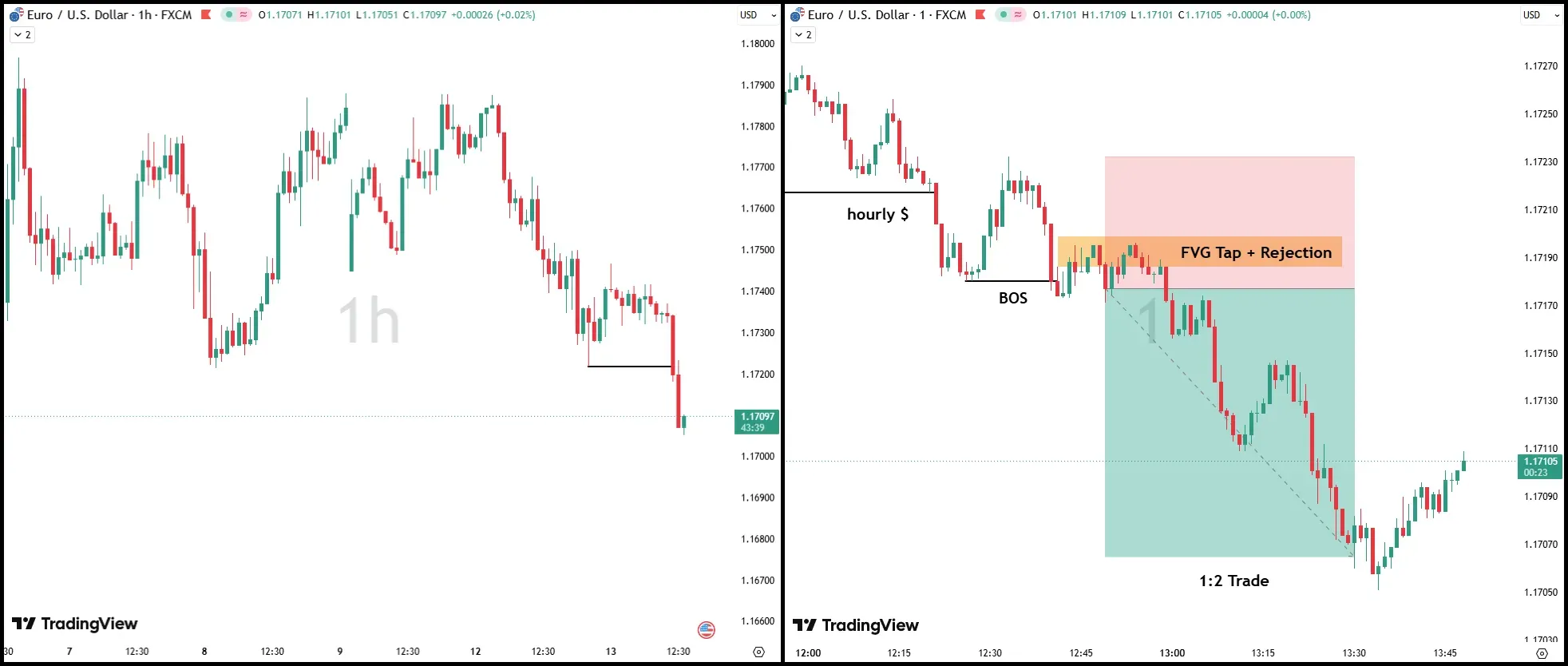
If higher timeframe trend is very strong like in example above ☝️, liquidity getting taken against the trend often leads to continuation instead of reversal.
For example:
- strong bearish trend
- price takes a low
- weak bullish reaction
- market continues lower
That is usually liquidity being cleared before continuation.
2. Weak Reaction After Liquidity Is Taken
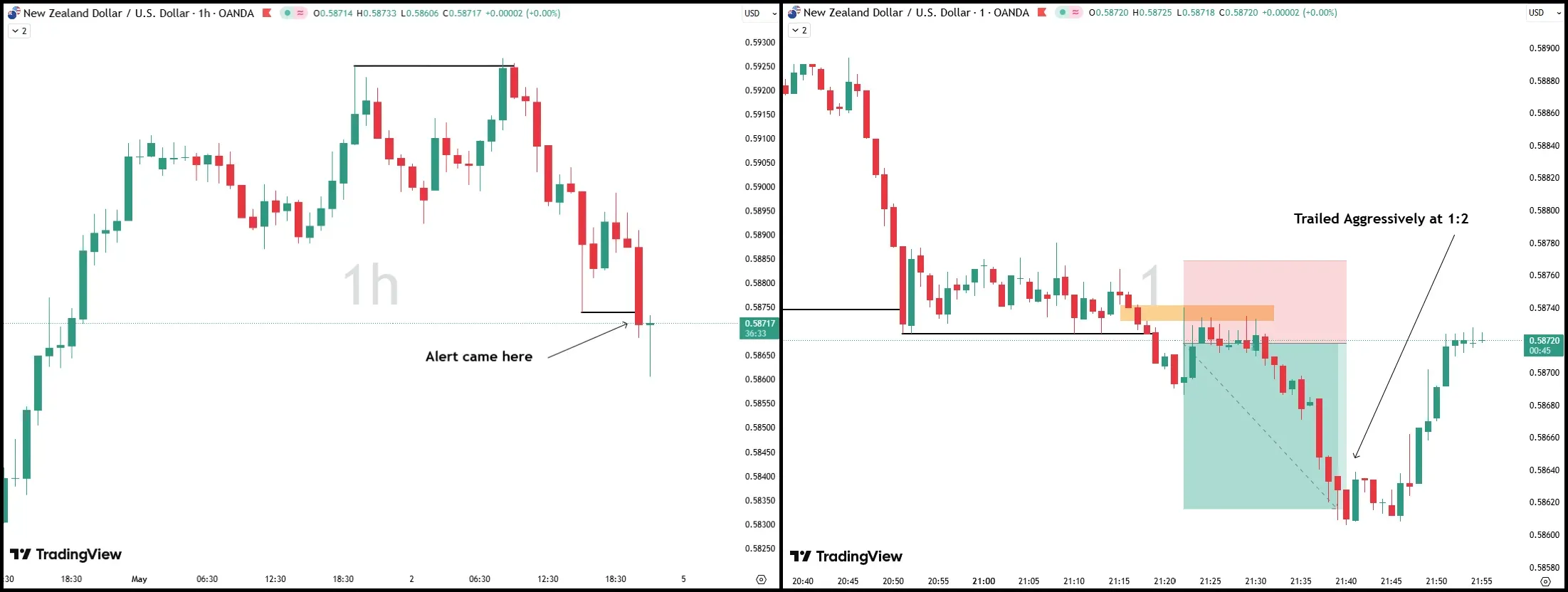
This is a huge warning sign.
If price takes liquidity and:
- barely rejects
- consolidates slowly
- keeps accepting near the highs or lows
then continuation becomes much more likely.
Weak reaction usually means the market still wants to continue.
3. No CHoCH or BOS
If structure never shifts, I usually avoid forcing reversal trades.
This was one of my biggest mistakes earlier: trying to short every buyside liquidity grab without waiting for actual bearish confirmation.
Now if structure still looks bullish after liquidity gets taken, I leave it alone.
Quick Checklist I Personally Use
Before entering after liquidity gets taken, these are the main things I check:
✅ Is this happening at an important HTF level?
✅ Did price react aggressively afterward?
✅ Has lower timeframe structure shifted?
✅ Is there a clean FVG retracement available?
✅ Does the session context support the move?
If most of these align, the setup usually becomes much cleaner.
If not, I either wait longer or skip the trade completely.
Where ScanLiquidity Fits In
ScanLiquidity helps me spot liquidity events immediately, especially when multiple pairs are moving at once.
But the alert itself is not the trade.
The sweep is the notification.
The confirmation is the decision.
That part still comes from reading price action properly after the alert.
Final Thoughts
Not every liquidity grab should be faded immediately.
Sometimes the best trade comes from reversal.
Sometimes the better trade is continuation.
The main thing that improved my entries was stopping the habit of reacting emotionally the moment liquidity gets taken.
Now I wait for confirmation first and let price show intention before committing.
For educational purposes only. Not financial advice.